Re-reading Form through the Agency of the Joint. The Archaeological Attitude of Design Driven Research
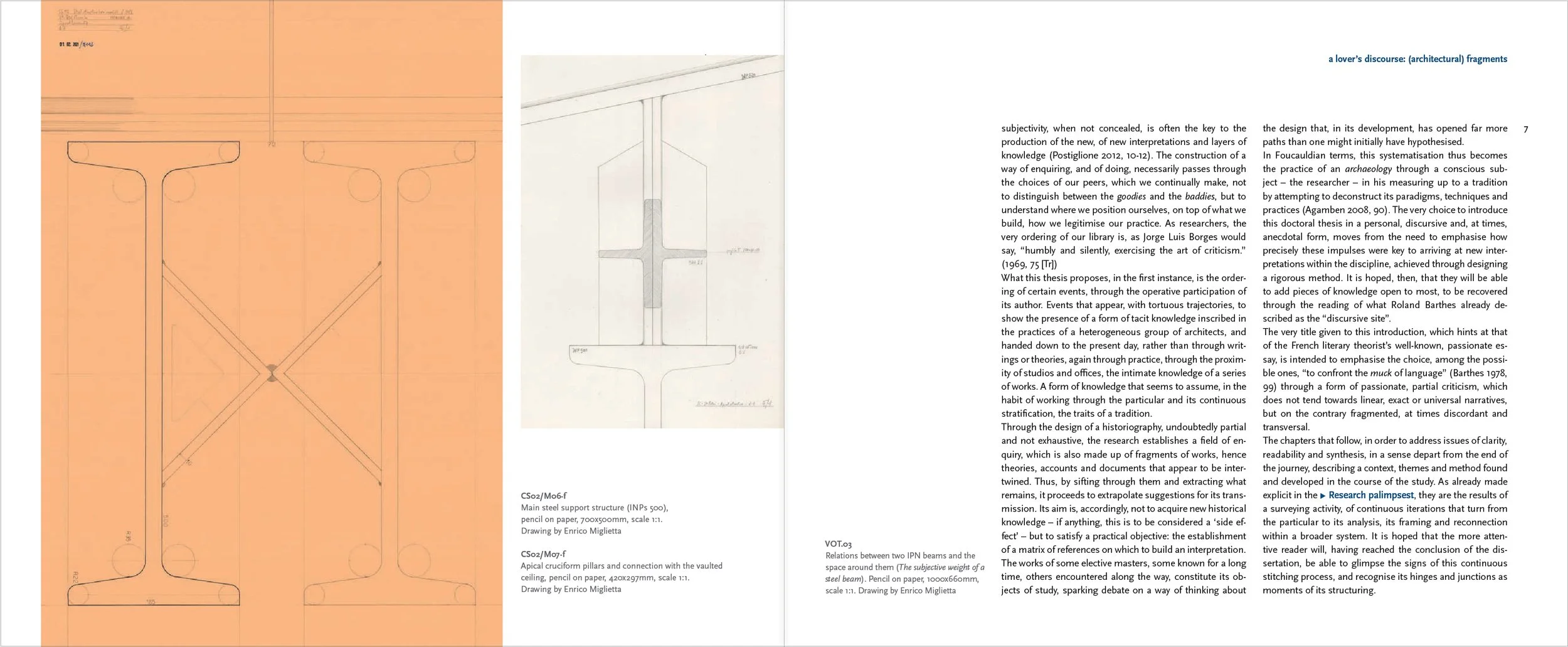
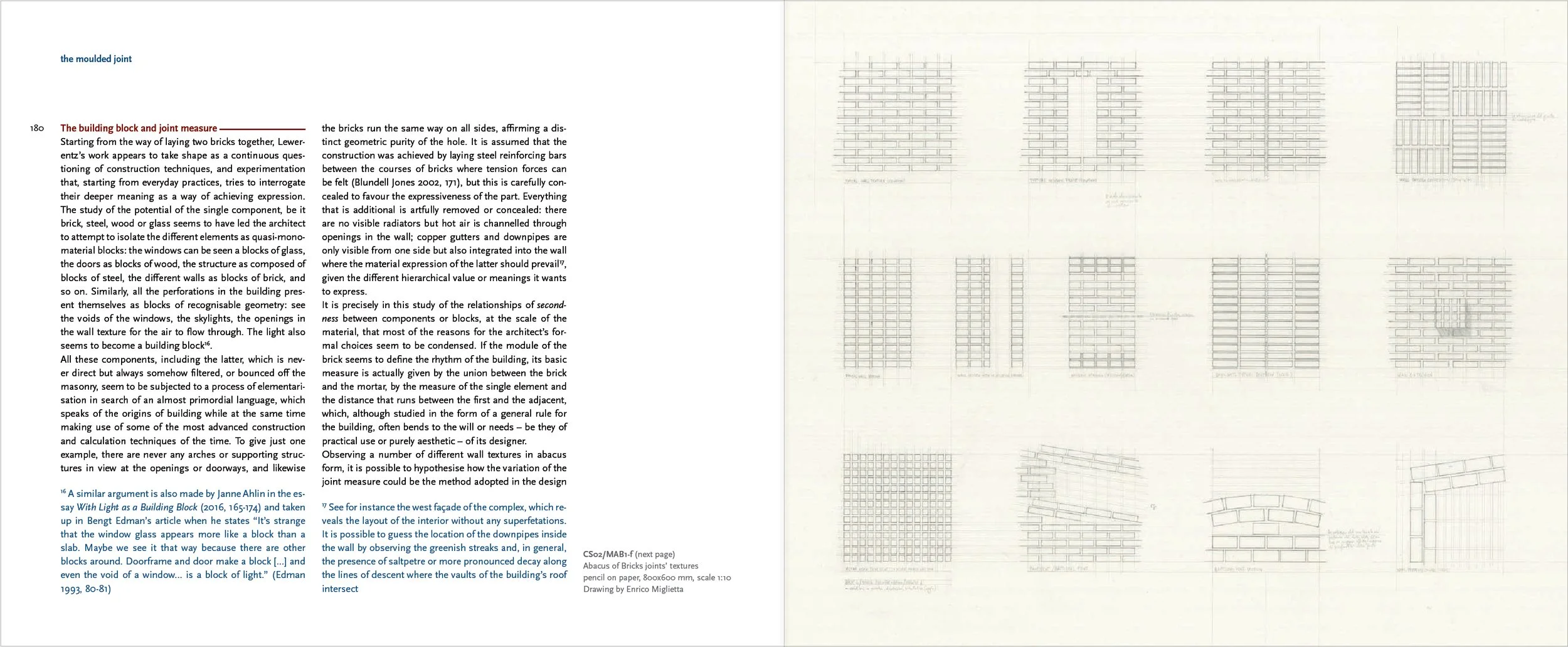
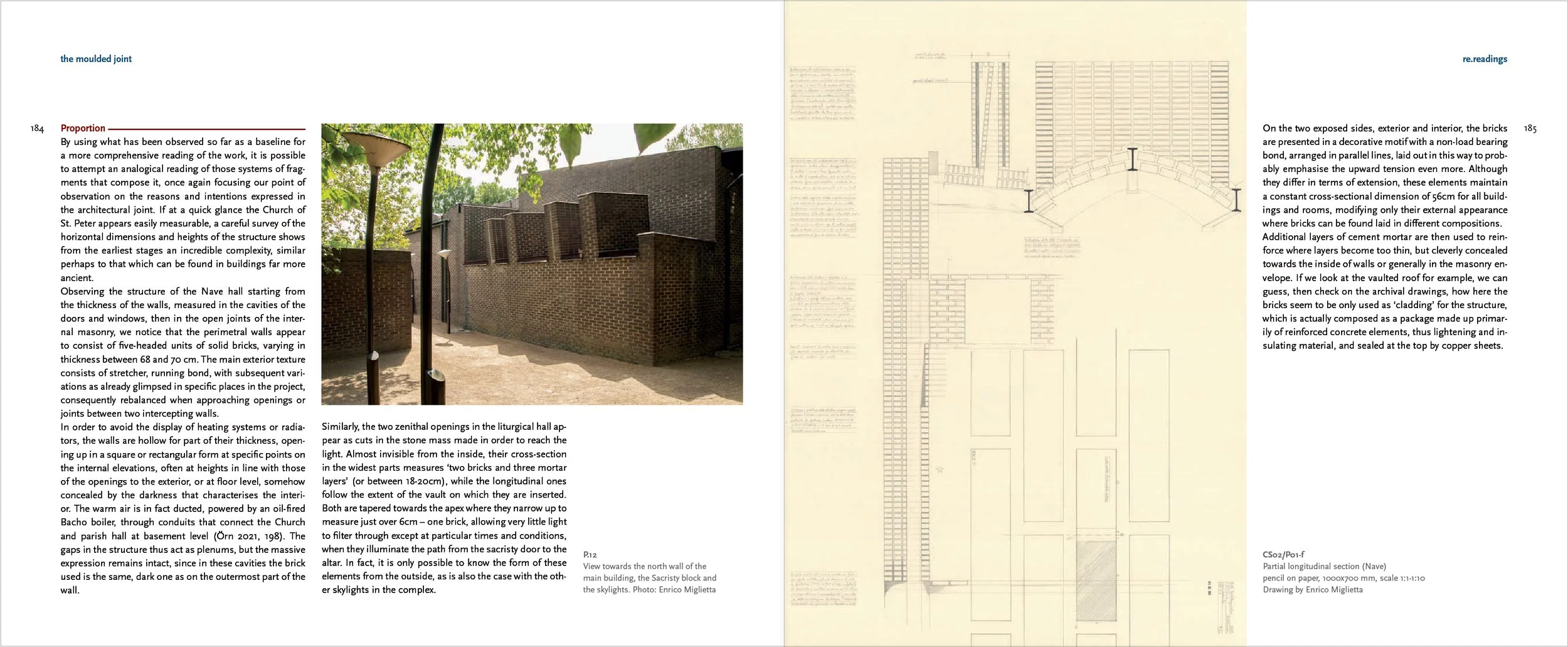
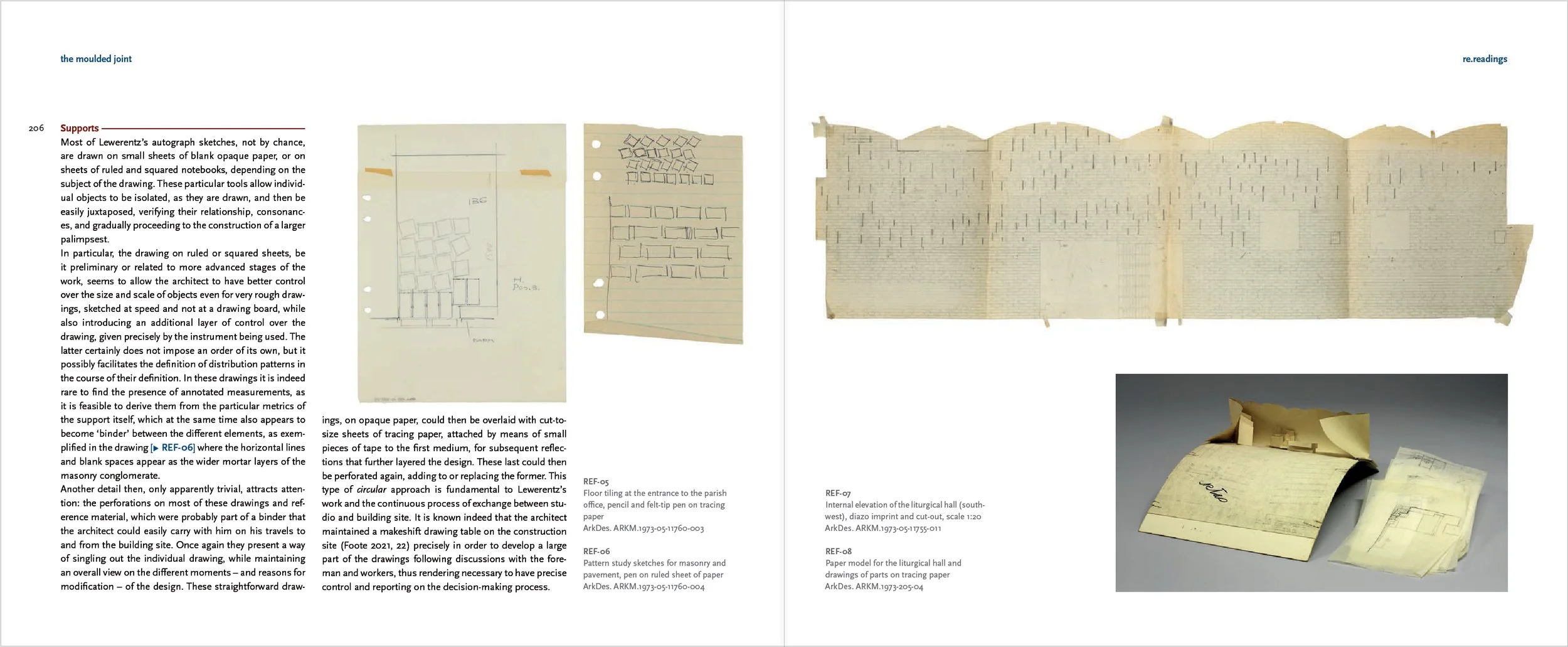
Enrico Miglietta, PhD dissertation. Politecnico di Milano – KU Leuven, 2024
Available in open access at: https://lirias.kuleuven.be/4147802?&lang=en | https://hdl.handle.net/10589/220032
Abstract / ENG
Can the study of the material's identity, the detail, and the binding—reciprocal dependence between things be observed as a point of onset, rather than of arrival, for architectural analysis and design?
Can the systematic questioning of relations of secondness, material and formal joints between elements, parts and fragments of a work become its structuring artifice, the red thread that orients its technical and expressive consistency, its tendency towards a whole?
What strategies make it possible to adhere to principles of coherence and necessity, balance between parts, in projects that adopt fragmentation as a design principle, programmatically renouncing abstract schematisms in favour of empirical research processes?
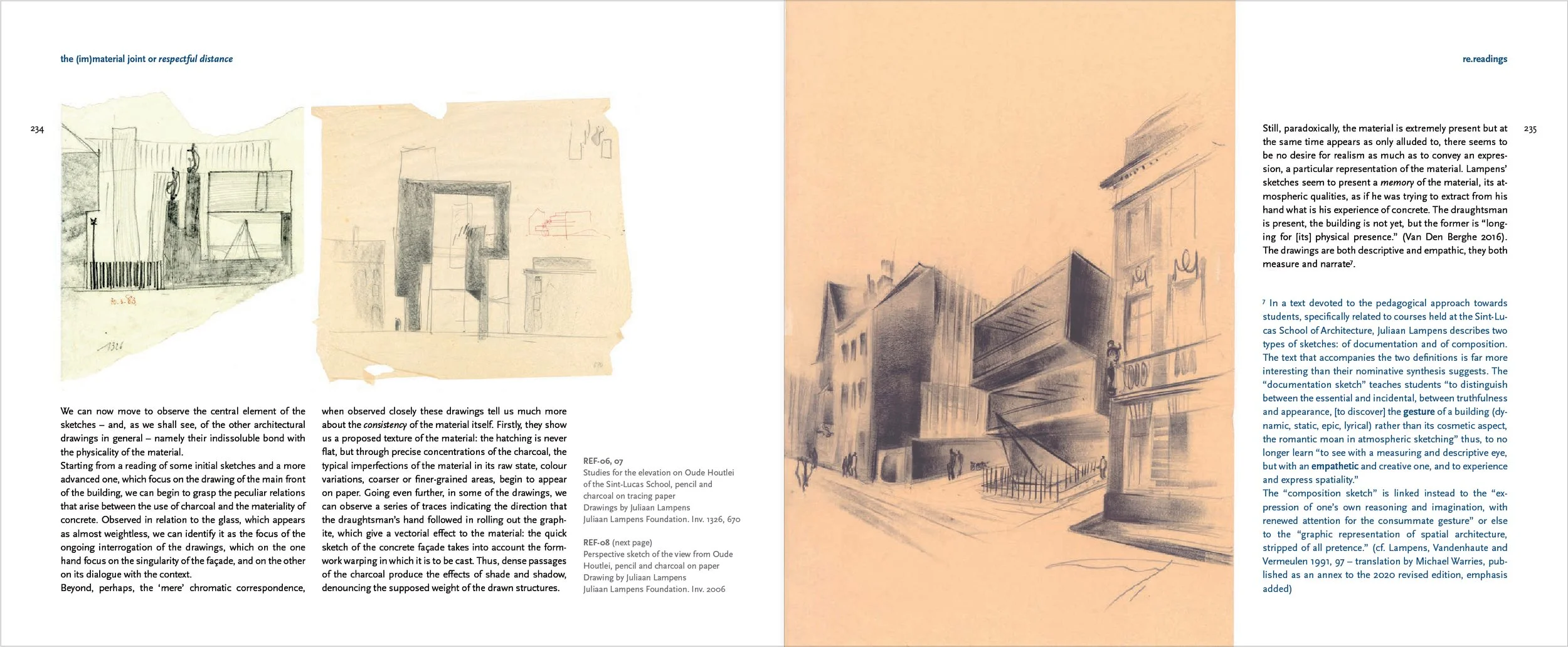
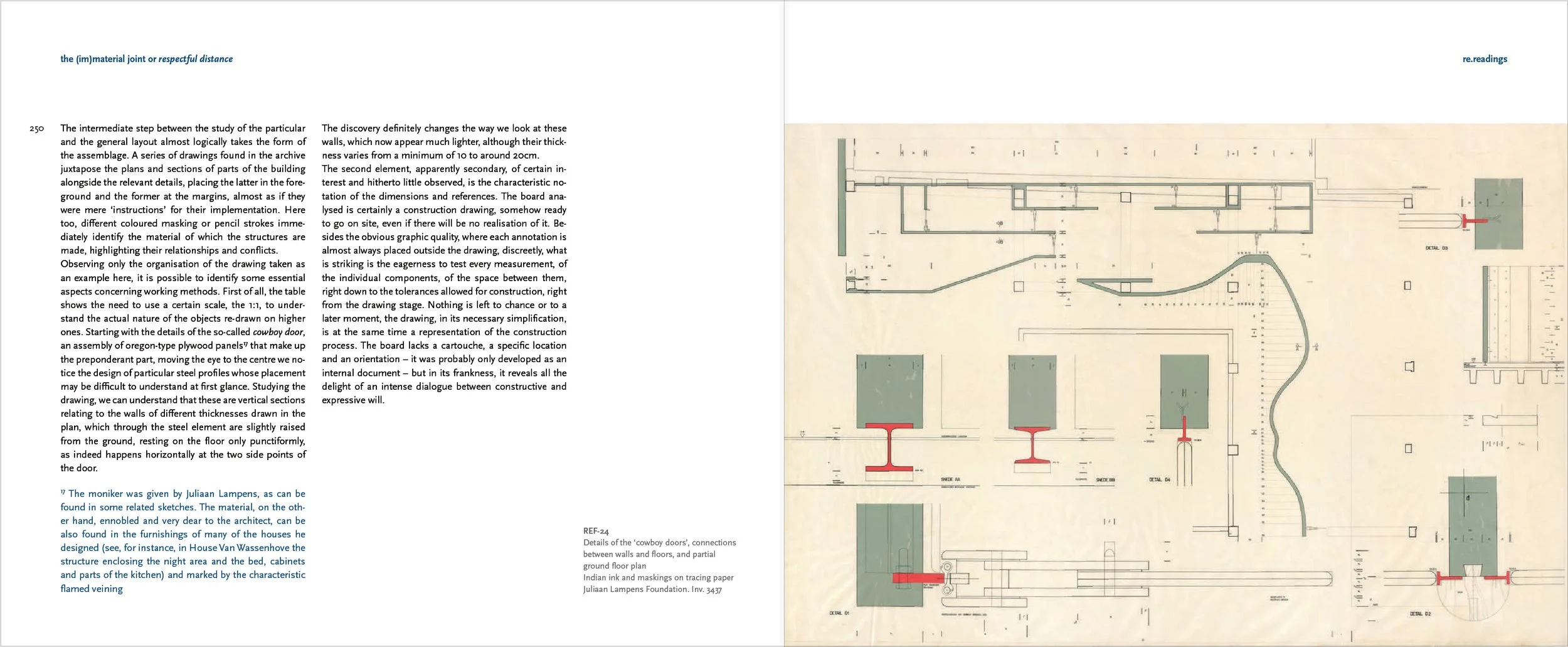
In a circular trajectory, typical of the flow of time that characterises artistic practices, this research starts from a reconnaissance on design to then proceed through it, be guided by it, find coincidence between researcher and author, thus situate his work within a tradition. Starting from the interpretative re-reading of works by architects of the so-called 'other' modernity, by formulating a rigorous method of critical investigation, this thesis rediscovers in their realisations a form of tacit knowledge, a way of interpreting the potential of each material and design, by successive stratifications, by fragments, an idea of unity. First through participant observation, then by design actions, through variation and the project of the new, this exploration formulates an excavation within an open strand of the architectural discipline, providing the reader with a field of findings as the result of a philosophical archaeology, a regression made to look forward, an act of passionate criticism.
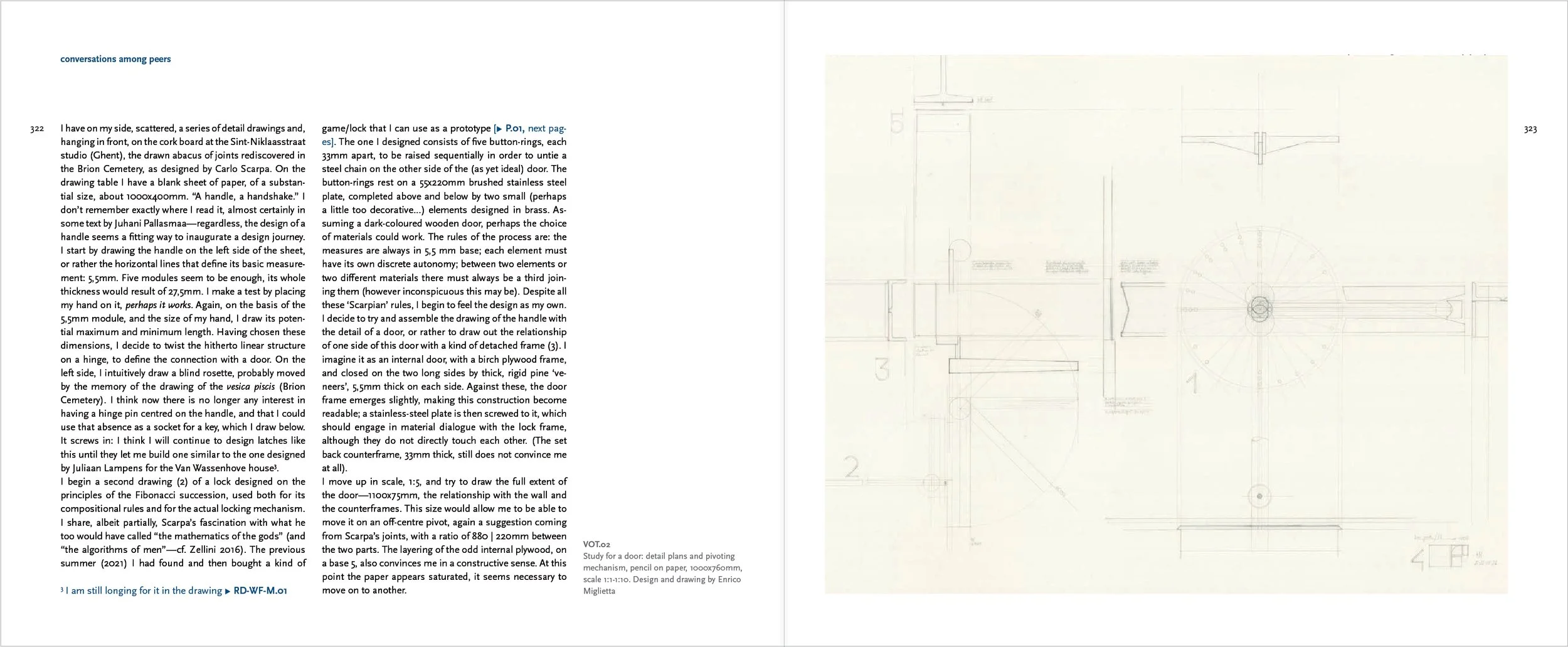
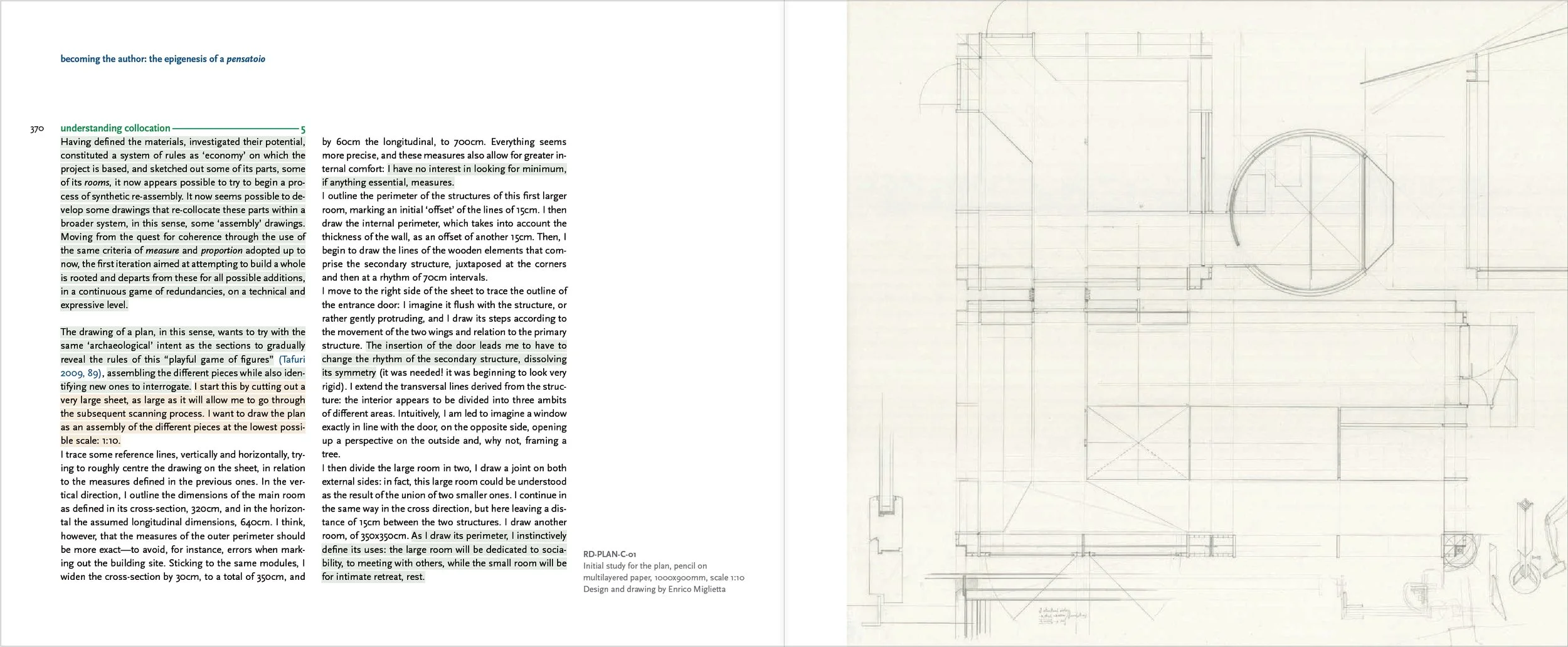
On these grounds, the research develops the proposal of a palimpsest for a design practice, as an attitude rather than a method, an open matrix on which it is possible to operate continuous rewritings, identifying a profound link between peculiar design strategies and drawing tools, and revealing their deep intertwining, their reciprocal agency. Moving from the design of a material-based economy, and of a particular type of tectonic readability, the research tests the potential of the architectural joint as ordering principle, the possibility of incorporating intentions into each fragment, and offering, as a gesture, their knowability to the dweller. Through the design of a pensatoio, a 'place for reflection' within the research and, at the same time, a fragment of the interiority of the researcher, it demonstrates how certain ways of making architecture, certain design-thinking strategies, are always closely intertwined with ways of working through drawing, with the relations we establish between its scale and our body.
In a passionate and partisan form, the research uses subjectivity as a key to access a more profound level of awareness, reconstructing then, through exemplification, the site of a problematic discourse. It does so to offer a new, manifold contribution of knowledge to the field of architectural research, suggesting possible transformations—from within. It does so to offer architecture students, researchers and practitioners, the passionate reader, the tools to build their own research attitude, their own reflective practice, intimate but never self-referential, rooted in iterative processes of study, exercise, observation and review.