Sigurd Lewerentz. The Paradox of Construction

Enrico Miglietta with Gennaro Postiglione. Chapter in Lewerentz Fragments, edited by Jonathan Foote, Hansjörg Göritz, Matthew Hall, Nathan Matteson. Actar 2021
Available at: Actar Publishers
Abstract / ENG
This essay offers a reflective investigation into the work of Sigurd Lewerentz, with a focus on the compositional and epistemic agency of detail in architectural thinking.
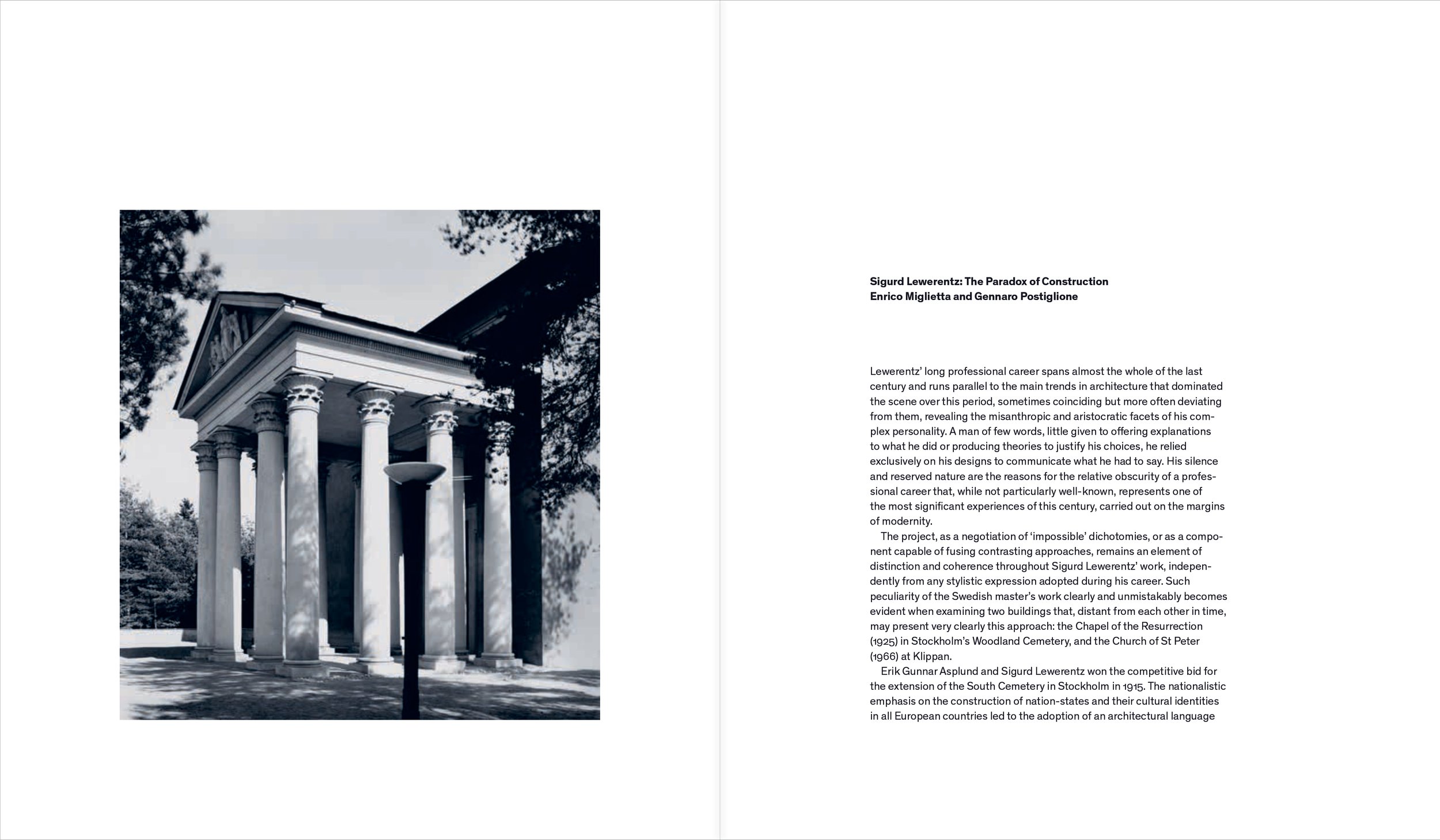
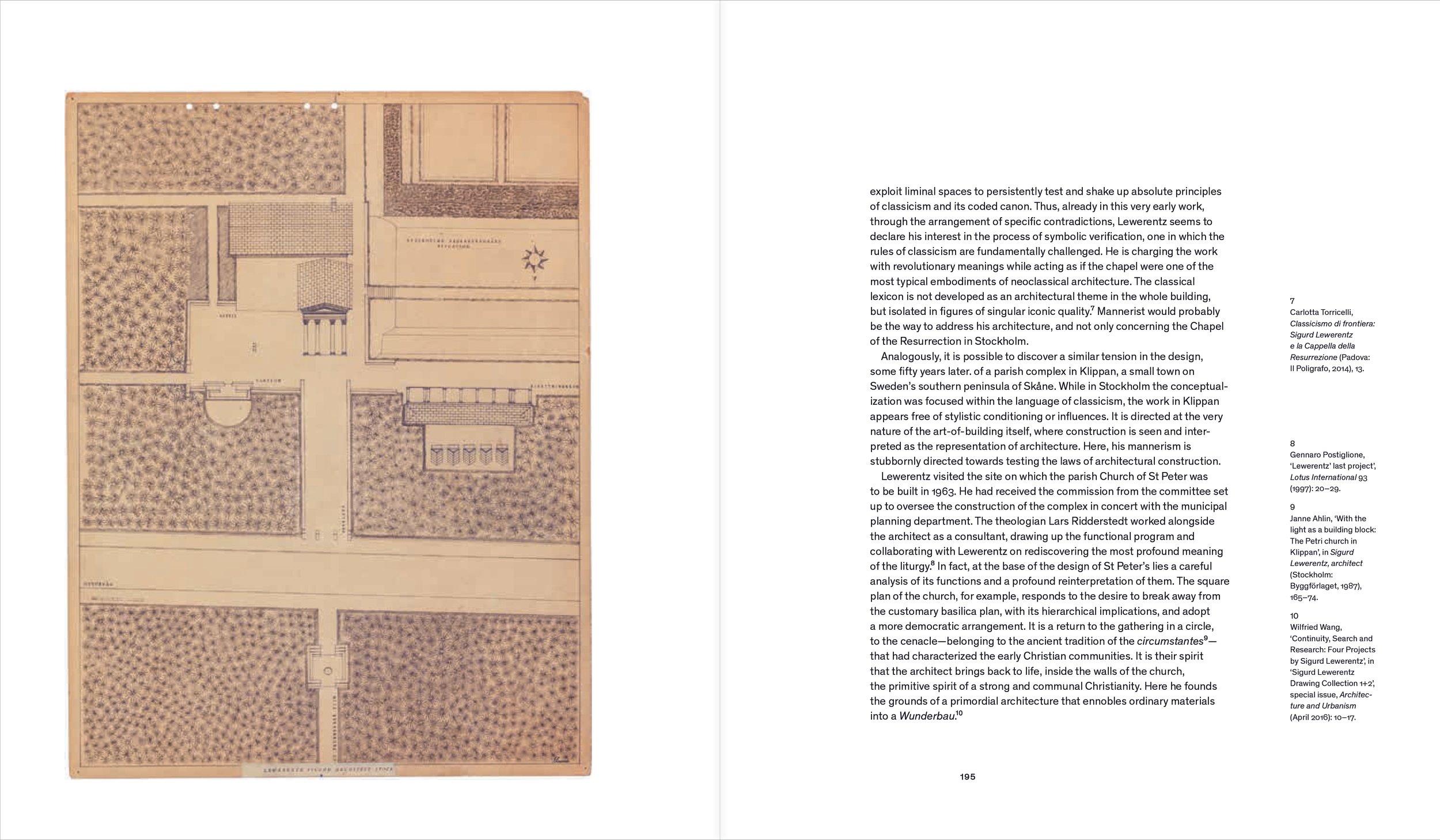
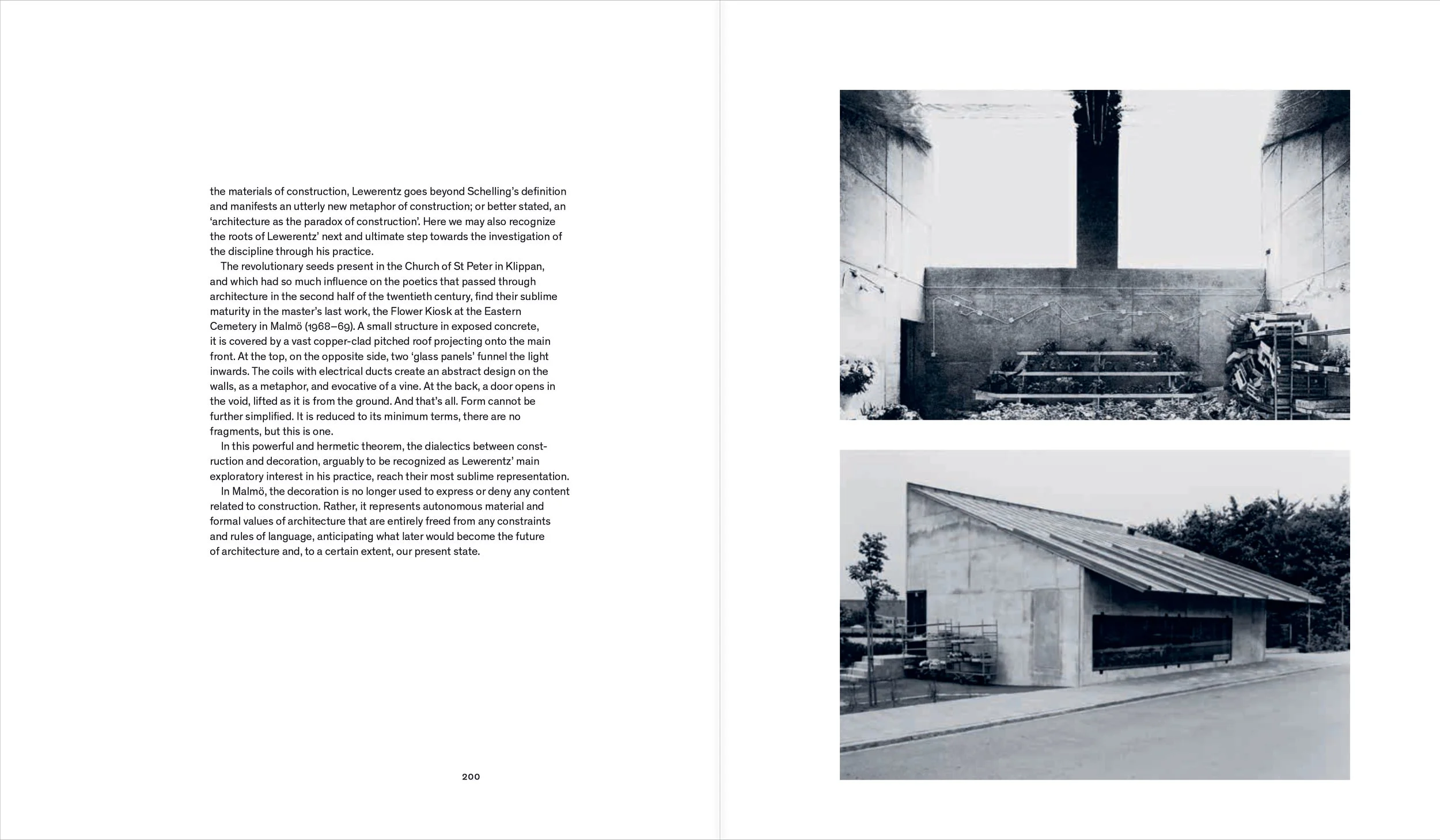
Written jointly with Gennaro Postiglione, the essay re-examines three key projects by Lewerentz—the Chapel of the Resurrection (1921-25), the Church of St. Peter (1963-66), and the Flower Kiosk in Malmö (1968-69)—in order to frame his architecture as a discipline rooted in context, bodily knowledge, and tectonic exactitude. Rather than relying on stylistic categories, the text centres on the material and symbolic depth of Lewerentz’s details—particularly his handling of the joint—as mediators between construction and meaning. The essay unfolds along two interwoven threads: on the one hand, it investigates the constructional intelligence embedded in Lewerentz’s built forms—where joints, thresholds, and alignments are not merely solutions to technical problems, but operative devices that sustain the building’s spatial, structural, and environmental performance. On the other hand, it reflects on how these same elements give rise to a non-discursive, experiential knowledge—activated through proximity, use, and bodily perception. The joint is interpreted as a site of condensation: as fragment that makes the whole intelligible, holding together the material, conceptual, and atmospheric tensions that traverse the work. Rather than illustrating an idea, such details perform it—expressing, through their presence, a way of thinking that is tactile, silent, and embodied.
The text highlights how Lewerentz’s works enacts a kind of thinking-through-building, where details are not the by-product of formal resolution but the very ground of architectural inquiry. Thus, the essay expands the notion of design-research to include the tacit and experimental forms of knowledge generated through making. It proposes that Lewerentz’s work can be seen as a paradigmatic instance of detail as epistemic mechanism—a notion that destabilises any easy separation between theory and construction, interpretation and execution.